Epoxy Crack Filler
A cracked slab is a lost sale unless it is repaired properly. Hairline cracks, pinholes and fissures appear during cutting, transport and polishing, and they show up clearly under a high gloss finish. A good epoxy crack filler fills these defects, bonds with the stone and polishes to a clean, glossy surface.
This page covers what an epoxy crack filler does, the grades available, where to use it and how to apply it correctly. If you are sourcing from epoxy resin manufacturers in India, use it as a checklist for what a stone repair resin should deliver.
What is an Epoxy Crack Filler?
An epoxy crack filler is a two-part resin system used to fill and repair minor cracks and small surface defects in stone. The resin and hardener are mixed, poured over the slab and spread so the liquid flows into every fissure. After curing and grinding, the repair blends into the stone.
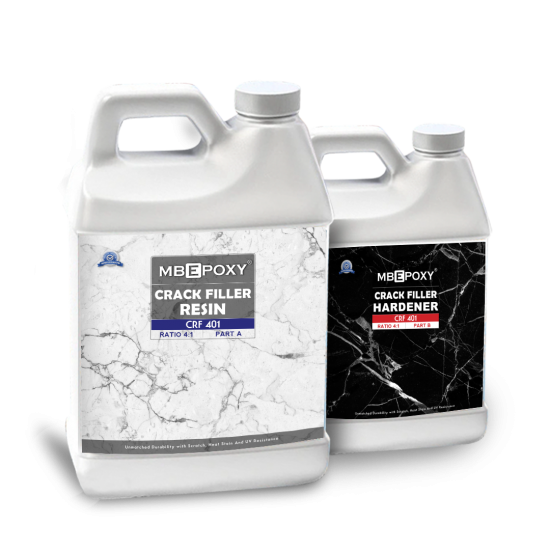
The Crack Filler CRF 201 is a low viscosity system with fast drying. Low viscosity matters because thin liquid travels deeper into narrow cracks. After polishing, it gives an excellent gloss and suits any kind of stone. It also works as a marble crack filler on polished slabs. Choosing the right epoxy filler for cracks is the difference between an invisible repair and a visible scar.
Crack Filler Grades Available
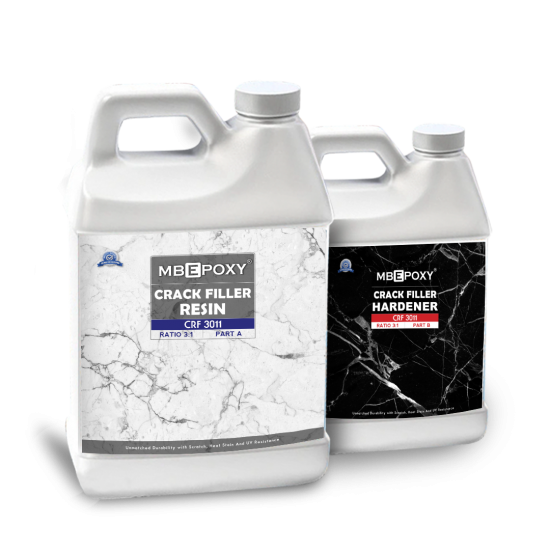
The category lists four grades. Each one is built for crack filling and coating on stone.
Contact the team before ordering in volume so the grade matches your stone type and your production speed.
Where an Epoxy Crack Filler Is Used
Natural Marble and Granite
Marble and granite slabs often carry natural fissures that open up during grinding. An epoxy crack filler seals them and prevents water from entering the stone. A dedicated marble crack filler also keeps the slab stable during cutting and handling.
Italian Marble
Italian marble is prized for its look, and it is also delicate. A transparent, clear coating lets the veining stay visible while the crack is closed. This is why fabricators prefer a clear filler for premium slabs.
Stone Casting
The same system is used in stone casting work, where the resin binds and fills cast pieces. Because the filler can be pigmented, the repair or casting can be matched to the stone colour.
Key Benefits of an Epoxy Crack Filler
Intensifies the colour of the stone
Low viscosity with fast drying, so production does not slow down
Penetrates well into narrow cracks
Provides a transparent and clear coating
Resists water and chemicals after curing
Can be pigmented to match the slab
Judge any epoxy filler for cracks on three points: how deep it penetrates, how clear it cures and how fast it dries.
An important limit applies. This product is meant for minor cracks, pinholes, fissures and hair-thin cracks. It is not a structural repair material and deep structural cracks need a different solution.
How to Apply an Epoxy Crack Filler
Grind the stone with a 400 number abrasive. This applies to marble and granite.
Clean the stone thoroughly. It must be free of dust, dirt, oil, moisture and grease.
Dry the slab under sunlight, or heat it to 40 degrees Celsius.
Mix resin and hardener in a 2:1 ratio in a disposable bowl. Mix thoroughly.
Pour the mixed material over the granite or marble slab.
Spread it with a putty knife or metal spatula so it flows into the cracks.
Let it cure in light for 24 hours.
After 72 hours, carry out the further grinding procedure.
Common Mistakes to Avoid
Skipping the cleaning step, which leaves oil or moisture trapped under the resin.
Guessing the mixing ratio. Use exactly 2:1 and mix until the blend is uniform.
Grinding too early. Wait the full 72 hours.
Using a large batch in one go. Mixed material hardens, so mix amounts you can spread quickly.
Using Crack Filler With Other Stone Products
Repair is rarely the last step. Many epoxy resin manufacturers in India stock these ranges together, which simplifies ordering. Once cracks are filled and ground, colour correction can be done with the epoxy colour changer range. For a mirror finish on granite, use the epoxy granite resin products. Marble slabs can also be treated with the epoxy italian marble resin range. To tint the filler itself, add colour from the epoxy pigments range.
Choosing the Right Supplier
An epoxy filler for cracks that cures slowly or leaves a cloudy patch causes rework, and rework costs more than the resin. When you compare epoxy resin suppliers in India, check for consistent viscosity, clear cured finish, written application guidance and dependable stock. Established epoxy resin manufacturers in India can also support bulk orders and repeat supply, which matters for fabricators who run daily production. The best epoxy resin suppliers in India will explain how to use the product and not only sell it.
Order Your Epoxy Crack Filler
For stone repair resins that cure clean and polish well, talk to trusted epoxy resin manufacturers in India like MB Enterprises. Share your stone type and daily volume, and our team will recommend the right grade and supply plan.
FAQs
1. What is an epoxy crack filler used for?
It fills and repairs minor cracks, pinholes, fissures and hair-thin cracks in natural stone such as marble and granite.
2. Can I use an epoxy filler for cracks on Italian marble?
Yes. The product works as a marble crack filler on Italian marble, and its transparent finish keeps the stone looking natural.
3. What is the mixing ratio?
Mix resin and hardener in a 2:1 ratio in a disposable bowl and stir until the blend is uniform.
4. How long does it take to cure?
Allow 24 hours of cure in light. Further grinding can be done after 72 hours.
5. Can I colour the filler?
Yes. The filler can be pigmented, which helps match the repair to the colour of the stone.
6. Is it suitable for large structural cracks?
No. It is designed for minor cracks and small surface defects. Structural cracks need a different repair method.
7. Where can I buy epoxy crack filler in bulk?
Contact established epoxy resin suppliers in India that provide bulk packs, grade guidance and technical support.