-2462x2317.png "MB Enterprises")
Epoxy Floor Coating Resin
What Is Epoxy Floor Coating Resin?
Epoxy floor coating resin is a two-part system - resin and hardener that chemically cures into a hard, seamless surface once applied over concrete. Unlike cement-based coatings, which remain as a separate layer on the surface, epoxy bonds directly into it. This is why flooring with epoxy resists loads, chemicals and constant traffic in a way tiled floors don't and why choosing the right resin for floor use depends on traffic type, chemical exposure and whether the floor is indoors or out.
How an Epoxy Flooring System Is Built
A complete system is applied in layers, not as one product: primer for adhesion, screed (where needed) for levelling, base coat for strength, top coat for protection and 3D resin as an optional decorative finish. Using the wrong layer in the wrong place, skipping the primer on old concrete or expecting a top coat to bond directly to bare concrete is the most common reason epoxy floors fail within a year instead of lasting a decade.
Top Epoxy Flooring Manufacturers in India
MB Enterprises being one of the trusted epoxy flooring manufacturers in India offers a complete range of epoxy floor coating resin systems - primer, screed, base coat, top coat and 3D decorative resin, under the MBEPOXY® brand. As an ISO 9001:2015 certified Indian manufacturer operating since 1987, we supply resin in bulk for industrial projects as well as smaller packs for residential and garage use, with technical specifications and pricing listed on every product page.
Whether you're sourcing epoxy flooring for industrial use across a large facility or looking for garage epoxy flooring for a single home, the products below are sold as individual components so you can order exactly what your project needs.
Our Epoxy Flooring Product Range
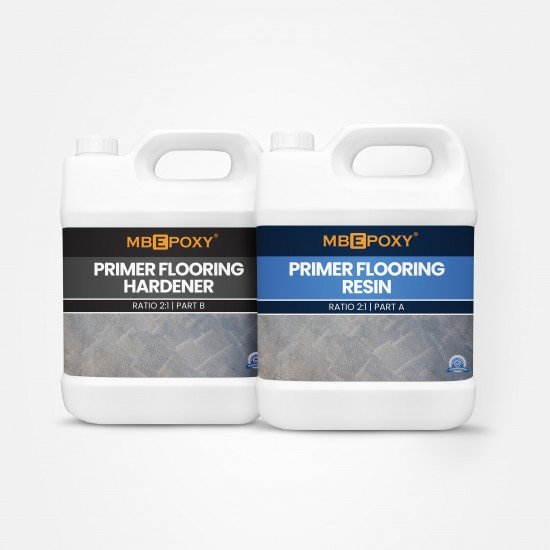
- Epoxy Primer Resin - The foundation layer. Penetrates concrete, seals pores and creates the bonding surface every other layer depends on. Applied first, always.
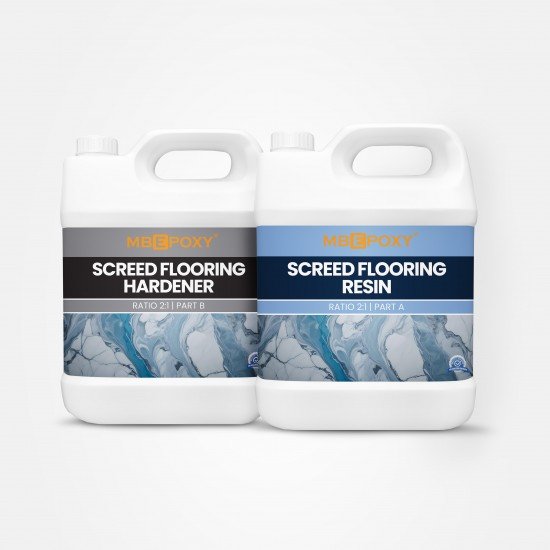
- Epoxy Screed Floor Resin - A resin used for industrial screed flooring, levelling uneven concrete and filling cracks before the base coat goes down. Essential wherever the existing slab isn't flat enough to coat directly. [silica and pigments to be separately]
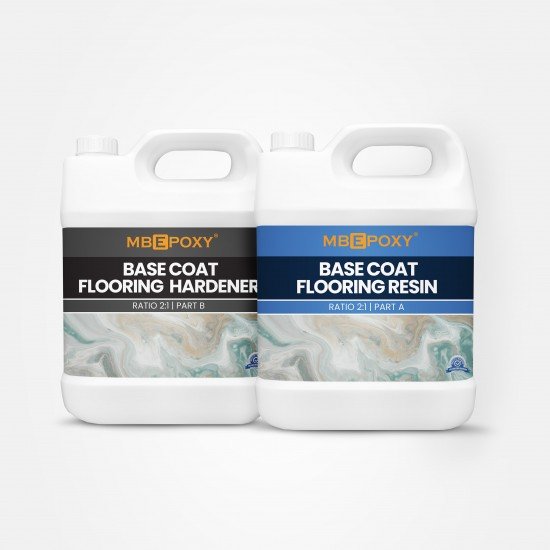
- Epoxy Base Coat Floor Resin - The structural body of the floor, giving it strength and load-bearing capacity for heavy duty industrial flooring.
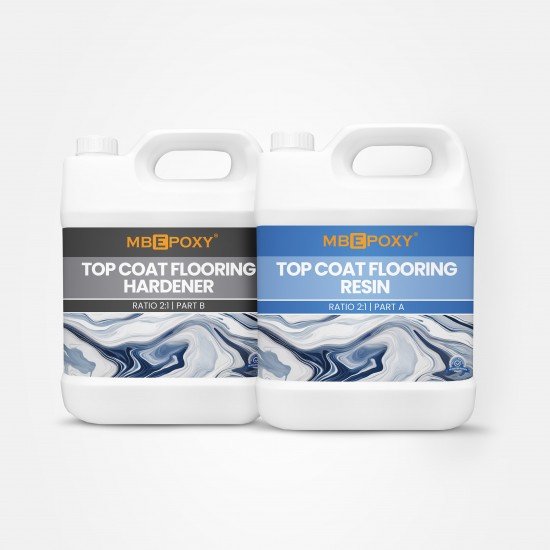
- Epoxy Top Coat Floor Resin - The protective finish layer: UV-stable, chemical resistant flooring with optional slip-resistant additives, available in gloss, satin, or matte.
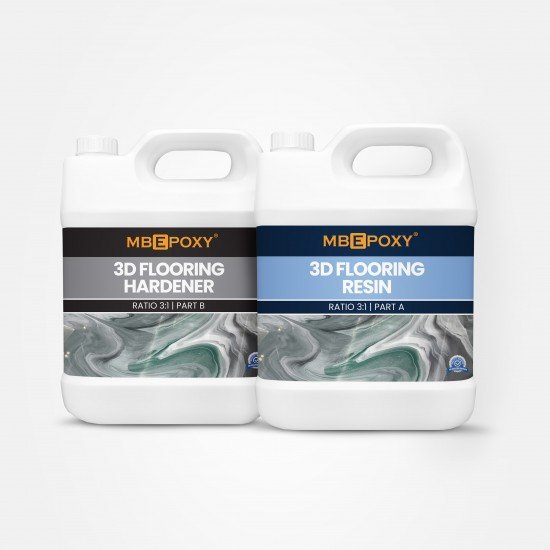
- Epoxy 3D Floor Resin - A high-clarity decorative resin for seamless 3D floor designs in showrooms, retail spaces and statement residential areas.
Technical Specifications
Per-kg pricing for resin, hardener, silica sand and pigment is listed on each product page, along with minimum packing quantities so bulk buyers can calculate exact costs component by component instead of requesting a quote for basic figures.
Applications of Epoxy Resin Flooring
Epoxy Resin Flooring for Homes
Epoxy resin flooring for homes is most common in garages, basements and utility rooms, where a seamless, low-maintenance surface matters more than industrial load capacity. Most home projects only need primer, base coat and top coat; screed is added only if the concrete needs levelling or repair first.
For garage epoxy flooring specifically, the top coat is where most decisions happen - gloss versus matte, plain colour versus flake and slip resistance, since garages regularly see water, oil and tyre tracking. Homeowners wanting a decorative statement floor often use the 3D Floor Resin as the finish layer instead of a standard top coat.
Industrial Epoxy Resin Flooring
Industrial epoxy resin flooring has to survive conditions a home floor never sees - forklift traffic, chemical spills, round-the-clock washdowns and constant point-loading. This is where chemical-resistant flooring and a properly layered system stop being optional.
We supply epoxy warehouse floor coatings and industrial epoxy resin flooring across:
- Warehousing and logistics - built for pallet-jack and racking loads
- Manufacturing plants - resistant to oils, solvents and abrasion
- Food and beverage processing - seamless, non-porous, washdown-safe surfaces
- Pharmaceutical facilities - hygienic, chemical-resistant finishes
- Commercial garages and parking structures - durable under continuous vehicle traffic
For heavy duty industrial epoxy floor coating, the base and top coat are typically specified at higher thickness and the screed becomes more important since industrial slabs are more likely to already have wear or cracking that needs correcting before coating.
Epoxy Flooring Materials and Their Role
The quality of an epoxy floor depends on the epoxy flooring materials used in the mixture. Each layer serves a functional purpose and must be selected based on site conditions.
Common materials include:
- Resin for floor bonding and surface strength
- Hardeners that control curing speed and hardness
- Fillers and additives for load resistance and anti-slip properties
- Topcoats that protect against abrasion and chemical attack
As established epoxy resin manufacturers, MB Enterprises focuses on consistent raw material quality to ensure predictable results on large projects.
Epoxy vs. Other Flooring Systems
Epoxy is harder and more chemical-resistant than polyurethane, making it the better choice for heavy static loads like warehouse racking. Polyurethane handles temperature swings and UV exposure better, which is why many industrial projects use a hybrid - an epoxy base coat for strength, topped with a UV-stable finish. Compared to tiles or cement flooring, epoxy resin flooring has no grout lines or joints where dirt and chemicals collect, which is the main reason it's specified for hygienic and high-traffic environments.
Epoxy Flooring Price in India
Epoxy flooring price in India depends on the resin solution chosen, floor area, surface condition and number of coats. Each product page lists per-kg pricing for resin, hardener, sand and pigment separately, along with minimum packing quantities, so you can build an accurate estimate based on your actual floor area and layer combination rather than a flat per-square-foot number that doesn't account for site conditions.
Why Choose MB Enterprises
MB Enterprises being one of the trusted epoxy resin manufacturers in India has offered epoxy resins since 1987 under the MBEPOXY® brand and is ISO 9001:2015 certified for quality management. As an established epoxy flooring company in India, we supply resin components not just finished kits with technical data and pricing available on every product page, so bulk and industrial buyers can specify a project accurately without waiting on a quote for basic information.
FAQs
1. What is epoxy floor coating resin used for?
It's used to create a seamless, durable surface over concrete for homes, garages, warehouses and industrial facilities. A complete system is built in layers - primer, base coat and top coat rather than a single product, so the right combination depends on traffic and chemical exposure.
2. Is epoxy resin flooring suitable for homes?
Yes, garages, basements and utility rooms are the most common residential uses. Homes typically need a lighter system than industrial sites, usually just primer, base coat and top coat, without the reinforced thickness industrial floors require.
3. What is the best resin for industrial flooring?
A layered system with a reinforced base coat, a screed where the slab needs levelling and a chemical-resistant top coat handles forklift traffic, spills and heavy machinery loads better than a single thin coating.
4. What materials go into an epoxy flooring system?
Resin, hardener, silica sand and pigment. Resin and hardener drive the cure at a fixed ratio; sand adds thickness and load resistance; pigment sets the finish colour. Exact packing ratios are listed on each product page.
5. How long does epoxy floor coating resin take to cure?
Our full range - primer through 3D resin reaches touch-dry in 4 hours and full cure in 24 hours, though complete chemical resistance develops over the following days, especially in cooler or humid conditions.
6. What certifications should I check before buying epoxy flooring resin in bulk?
Look for ISO 9001 certification, which confirms an audited, consistent production process. MB Enterprises is ISO 9001:2015 certified, reducing the risk of batch-to-batch inconsistency on large orders.
7. Can epoxy flooring be applied over old or damaged concrete?
Yes, using an epoxy screed layer to fill cracks and level the surface first. Skipping this step over damaged concrete is one of the main reasons epoxy floors delaminate early.
8. What is the difference between epoxy and polyurethane flooring?
Epoxy is harder and better for static heavy loads, polyurethane is more flexible and handles temperature changes better. Many industrial floors combine both - epoxy base coat, UV-stable top layer.