-2462x2317.png "MB Enterprises")
Why Epoxy Flooring Is Becoming the Preferred Choice in India
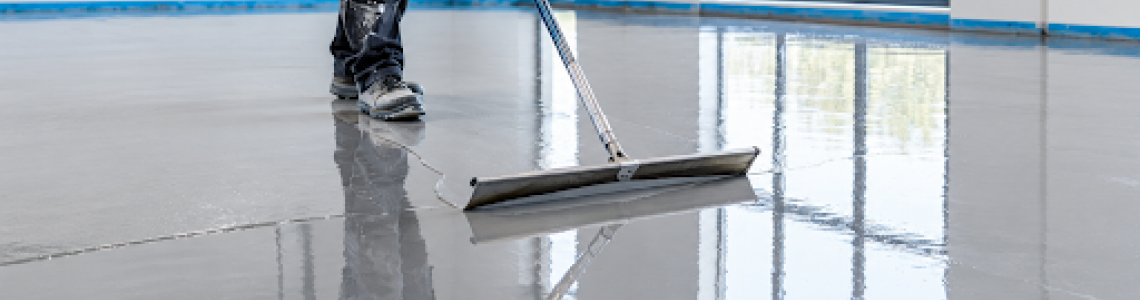
Walk into a newly built warehouse, a café or a recently finished apartment in Mumbai or Pune and there's a fair chance the floor has no grout lines and a smooth, slightly glossy finish. That's usually epoxy flooring. Not long ago you would mostly find it in factories and hospitals. Now architects, builders and homeowners ask for it by name and epoxy flooring for homes is one of the faster-growing requests in residential interiors. Demand for an experienced epoxy flooring company in India has grown along with it. This blog explains why the shift is happening, where epoxy works well, and where you should be careful.
What Epoxy Flooring Actually Is?

Epoxy flooring is a two-part system. A resin and a hardener are mixed in a fixed ratio and applied over prepared concrete. The mix cures into a hard, dense surface that bonds to the slab beneath it. A complete floor is usually built in layers: a primer that grips the concrete, one or more body coats that add colour and thickness, and a top coat that takes the daily wear. Skipping or rushing any layer is the most common reason a floor fails early, which is worth remembering when you compare quotes.
Why Indian Buyers Are Choosing It
It handles heavy, everyday use
Indian factories, warehouses and parking areas put floors through forklifts, pallet trolleys, oil spills and constant foot traffic. Plain concrete dusts and cracks under that kind of load. A properly applied epoxy layer resists abrasion, oil and many common chemicals, so the surface stays intact for longer. It isn't indestructible. A dropped steel tool or a badly prepared slab can still damage it. But for most working environments it outlasts bare or painted concrete by a wide margin.
It's easy to keep clean

With no joints or grout lines, dirt has fewer places to hide. That's why epoxy flooring shows up in food units, pharma plants, labs and clinics, where hygiene checks are routine. The same logic applies at home. A kitchen or utility area can be cleaned with a mop and mild detergent, with no scrubbing of tile joints.
It copes with India's climate, if the slab is ready
Heat, humidity and monsoon damp are hard on floors. Epoxy doesn't swell, warp or soak up water the way some other finishes do. The catch is the concrete underneath. If moisture is rising through the slab when epoxy goes on, the coating can bubble or peel. A good applicator tests moisture first and waits if needed. Ask about this before work starts.
It gives a smooth finish on imperfect slabs

Few concrete floors are perfectly flat. Self leveling epoxy resin flooring is a low-viscosity mix that spreads across the slab and settles into an even surface. It suits showrooms, offices, hospitals and modern homes where a clean, flat look matters. It can correct minor undulations, but it won't fix cracks or structural damage. Those need repair first.
The design options are wide
Solid colours, flake finishes, metallic swirls and 3D effects are all possible, which is a big reason designers like it. You get a floor that looks planned rather than merely functional, whether it's plain grey for a warehouse or a marble-style finish for a living room.
It can cost less over time
Upfront, epoxy may cost more than basic tiles or paint. Over several years it often works out cheaper, because there's little maintenance, no grout to repair and no frequent replacement. Downtime is short too. Many commercial spaces can go back into use within a few days, depending on the system and the cure time.
Epoxy Flooring for Homes
Homeowners used to think of epoxy as a garage-only material. That has changed. Today it goes into kitchens, living rooms, basements, utility areas, balconies and terraces. It gives a continuous surface without tile joints, and it can be made anti-slip with the right additive. Two cautions apply. Standard epoxy can yellow under direct sunlight, so outdoor areas need a UV-stable top coat. It also feels harder underfoot than wood or carpet, which matters if you're thinking about bedrooms.
What to Watch Out For
Epoxy flooring isn't perfect. Surface preparation, usually grinding, matters more than the product itself. A glossy finish can be slippery when wet unless an anti-slip texture is included. Repairs on a coloured floor can be visible if the shade doesn't match. And a wrong mix ratio or a rushed application will show up within months. Most complaints trace back to the application, not the material.
How to Choose an Epoxy Flooring Company in India

The quality of the floor depends on the material and on the people applying it. When you're shortlisting a company, look for clear technical data sheets with mix ratios and coverage figures, samples you can see, and proof of past projects similar to yours. A good team will also talk about surface preparation and moisture testing without being asked. Epoxy flooring manufacturers that make their own resins are usually easier to hold accountable for batch consistency than traders who relabel someone else's product.
Plan Your Floor With the Right Guidance

The right system depends on your slab, your traffic and how the space will be used. If you're comparing options for a home, a factory or a showroom, talk to the team at MB Enterprises about the right primer, self leveling epoxy resin flooring and top coat combination for your project. It's honest, practical guidance from an epoxy flooring company in India that manufactures its own resins. Share your requirements with us and we'll help you choose.
Frequently Asked Questions
1. How long does epoxy flooring last?
With correct preparation and a good top coat, epoxy flooring commonly lasts 5 to 10 years or more. Heavy industrial traffic shortens that, and light residential use can extend it.
2. Is epoxy flooring for homes a good idea?
In most cases, yes. It works well in kitchens, garages, utility areas and living spaces where you want an easy-to-clean, joint-free surface. It's less suitable if you prefer a soft, warm floor underfoot.
3. What is self leveling epoxy resin flooring?
It's a low-viscosity epoxy that spreads across a prepared slab and levels itself, usually at a thickness of 2 to 3 mm. It's used where a smooth, flat, high-quality finish is wanted.
4. Can epoxy be applied over existing tiles?
Sometimes. The tiles must be firmly bonded, clean and sound, and the surface needs to be ground and primed properly. Loose or hollow-sounding tiles should be removed first.
5. Is epoxy flooring slippery?
A smooth, glossy finish can be slippery when wet. Anti-slip additives such as fine silica sand, or a textured top coat, solve this.
6. How long does epoxy take to cure?
It's usually touch-dry within 12 to 24 hours, ready for light foot traffic in a day or two, and fully cured in about 5 to 7 days. Exact times depend on the product, temperature and humidity.

Leave a Comment