-2462x2317.png "MB Enterprises")
Base Coat vs Top Coat in Epoxy Flooring: What’s the Difference?

When people look into epoxy flooring, the focus usually stays on how it looks - smooth, glossy and clean. But what really decides how long that floor will last isn’t just the finish you see. It’s the system underneath. Many flooring issues like peeling, dullness, or early cracks come down to one thing: the difference between the epoxy floor base and the top coat for flooring not being properly understood or applied.
If you’re planning flooring for a commercial space, factory, or even a home, this is something worth getting right from the start. Because once the flooring is done, fixing it later is far more expensive than doing it correctly the first time.
Base Coat vs Top Coat: Quick Difference
If you’re short on time, here’s the simplest way to understand it:
- Epoxy floor base - Bonds with concrete and provides strength
- Top coat for flooring - Protects the surface and gives the final finish
Both are important. One builds the foundation, the other protects it.
Why Epoxy Flooring Is More Than Just a Surface Finish

What you see on the surface of epoxy flooring is only a small part of the story. The real performance comes from how well the layers underneath are applied.
A proper epoxy floor coating forms a strong bond with the concrete and creates a durable surface that can handle regular wear. In demanding environments like factories and warehouses, industrial epoxy floor coating is used specifically because it can take heavy loads, chemical exposure and constant movement.
But here’s something that often gets overlooked - floors don’t fail overnight. In most warehouse and garage projects, issues like peeling or bubbling usually start months later and almost always trace back to poor bonding or missing protection layers.
That’s why the flooring setup matters just as much as the material itself.
What Makes the Epoxy Floor Base So Important

The epoxy floor base is the first layer applied after the surface is prepared. Even though it stays hidden, it’s doing the most critical work.
This layer is responsible for bonding with the concrete. When applied properly, it penetrates the surface and creates a strong grip. Without this, the coating has nothing solid to hold onto.
In real-life scenarios, especially in industrial areas, weak adhesion is one of the biggest reasons for flooring failure. Floors may look fine initially, but over time, you’ll start seeing patches lifting or air bubbles forming.
The base coat also plays a role in handling stress. In places where forklifts, heavy equipment, or continuous foot traffic are common, this layer absorbs the load and prevents cracks from forming in the upper layers.
Another practical benefit is leveling. Most concrete floors have minor unevenness. The base layer helps smooth this out so the rest of the floor build-up sits evenly. This not only improves durability but also makes sure the final finish looks consistent.
How the Top Coat Protects and Finishes the Floor
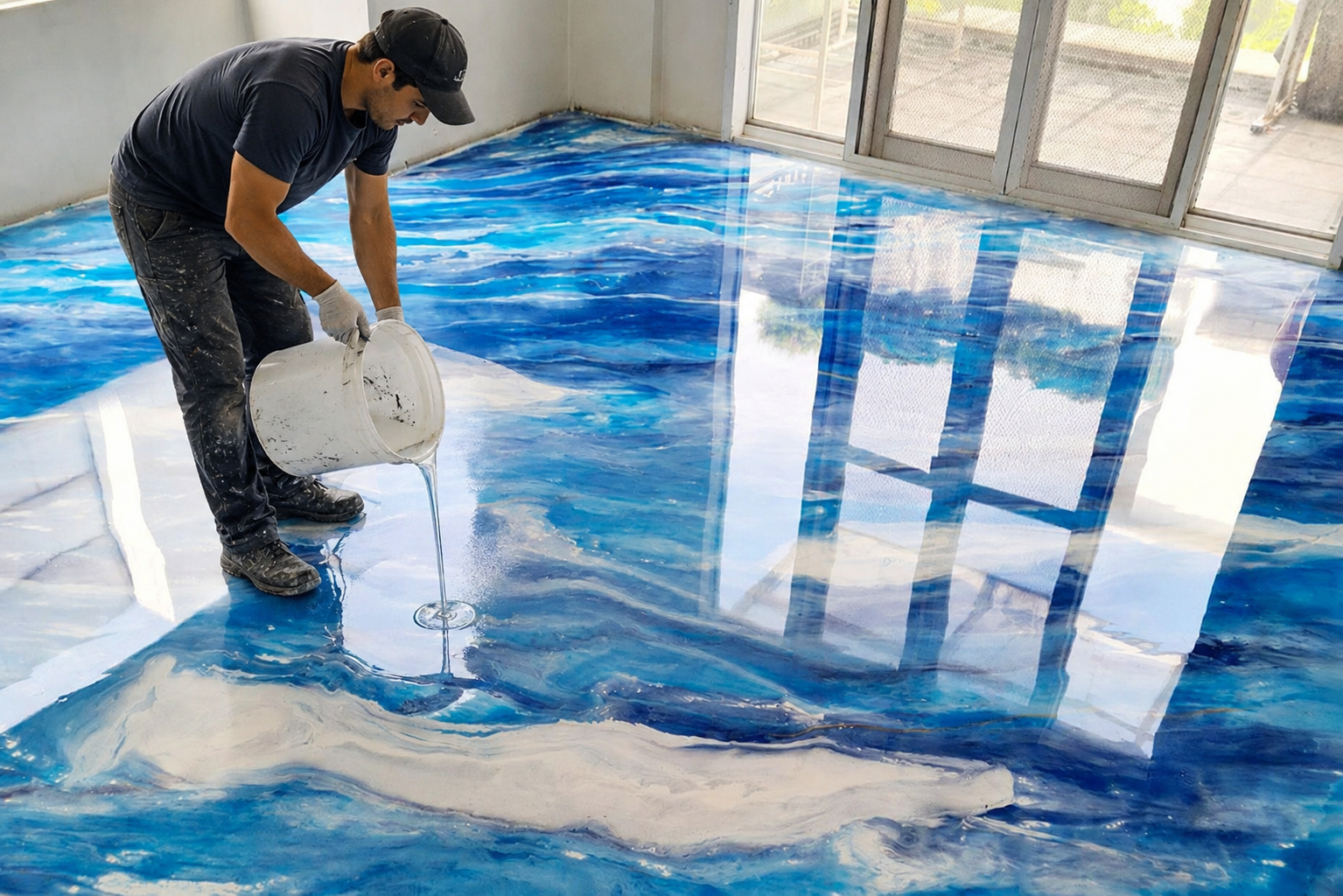
The topcoat is the last layer that is applied to the floor after the base has been applied. The topcoat is the layer that receives the majority of the wear on a daily basis, it prevents damage to the layers below from scuffs, stains and moisture.
In garages, the topcoat creates a barrier to protect the finish from tire marks and oil stains. In case of high foot traffic or commercial installations, the topcoat provides protection to the floor that has to withstand the constant movement of people and equipment.
The topcoat also impacts the aesthetic appeal of the floor. Many showrooms have glossy finishes on the topcoat because of the reflection of light through the topcoat that enhances the appearance of the spaces. A matte finish, on the other hand, is preferred in areas where a subtle, less reflective surface is needed.
In some cases, anti-slip additives are included in the top coat. Using industrial epoxy floor coating is especially useful in areas exposed to water or spills, where safety becomes a concern.
From a maintenance point of view, this layer makes a noticeable difference. A well-applied floor top coat creates a smooth, non-porous surface, which means dust and dirt don’t settle easily. Cleaning becomes quicker and the floor retains its appearance for longer.
Why Each Layer Matters in Epoxy Flooring Performance

A common mistake people make is assuming that one strong layer is enough. While the two layers perform separate roles, failure to install either will lead to flooring performance issues.
Here’s what typically happens:
Weak or missing base coat
- Poor adhesion
- Peeling or bubbling over time
- Reduced load-bearing capacity
Missing or low-quality top coat
- Visible scratches and stains
- Faster wear and dull appearance
- Higher maintenance effort
These issues don’t always appear immediately. In many cases, they start showing after a few months of use, which is why they’re often overlooked during installation.
Step-by-Step Epoxy Flooring Application Process Explained

A reliable epoxy flooring result comes from following the right application process from start to finish.
It begins with surface preparation. This involves cleaning the concrete, removing dust or oil and fixing cracks. This step is critical if the surface isn’t prepared properly, even the best materials won’t perform well.

The next step is applying the epoxy floor base, which creates the foundation and ensures proper bonding.
Depending on the requirement, additional layers may be added, especially in industrial epoxy floor coating where extra strength is needed. In many projects, extra steps like primers, screeds, intermediate coats or surface treatments may also be included depending on the application, load conditions and flooring requirements.
Finally, the top coat for flooring is applied. This seals the surface, adds protection and gives the floor its final look.
After application, the floor is left to cure. While it may feel dry within a few hours, full curing takes longer and is necessary for long-term durability.
Why Usage Conditions Decide the Right Flooring Approach
Not every space needs the same epoxy flooring approach. The way the area is used plays a big role in deciding the flooring setup.
In industrial spaces, the focus is on strength. The epoxy floor base needs to handle weight, movement and pressure without weakening.
In commercial spaces like showrooms, the emphasis shifts to the floor top coat, as appearance and ease of cleaning become priorities.
For residential areas, a balanced approach works best - strong enough for daily use and easy to maintain.
This is where working with a knowledgeable epoxy flooring company in India helps. Instead of using a standard approach, the flooring is planned based on actual usage.
Common Signs Your Epoxy Flooring Is Failing

If a floor hasn’t been done correctly, there are usually early signs. Spotting these can help you take action before the damage becomes severe.
- Peeling or lifting from the surface
- Air bubbles or uneven patches
- Loss of shine or dull finish
- Stains that don’t clean easily
- Visible cracks in high-traffic areas
In most cases, these issues are linked to either poor bonding at the base level or lack of protection at the top.
Choosing the Right Epoxy Flooring for Long-Term Performance
Selecting the right epoxy flooring isn’t just about picking a product - it’s about understanding how your space will be used over time.
A warehouse dealing with heavy machinery will need a different floor build-up compared to a retail store or a home garage. Factors like traffic, exposure and cleaning requirements all need to be considered.

Trusted epoxy flooring manufacturers usually provide options suited for different environments, making it easier to choose the right combination of layers and finishes.
Cost vs Long-Term Value: What Actually Matters
When planning epoxy floor coating, it’s natural to compare costs. But focusing only on the initial price can lead to poor decisions.
The durability of the floor depends on how well the epoxy floor base and top coat for flooring are applied. Other important processes like proper surface preparation, primer application, curing time and intermediate layers also play a major role in overall flooring performance. Cutting corners on either layer might reduce upfront cost, but it often leads to repairs or rework much sooner.
A well-done flooring setup, on the other hand, lasts longer, needs less maintenance and proves more cost-effective over time.

A strong epoxy flooring starts with the right epoxy floor base. This layer creates proper bonding with the concrete surface, improves load-bearing strength and helps the flooring system stay durable even under heavy traffic and industrial use. A well-applied base coat also helps prevent common issues like peeling, bubbling and early surface failure.

The top coat for flooring plays an equally important role by protecting the surface from scratches, stains, chemicals and daily wear. It also enhances the final appearance of the floor, whether you want a glossy, matte or anti-slip finish. A quality top coat helps the flooring stay cleaner, last longer and maintain its appearance over time.
For reliable performance and long-lasting results, choosing high-quality products for both layers is essential. You can explore dependable flooring solutions from one of the top epoxy flooring manufacturers in India - MB Enterprises.
FAQs
1. Which is better, top coat or base coat?
Both are equally important in epoxy flooring. The base coat provides strength and bonding, while the top coat protects the surface and improves durability.
2. Do you need a top coat for epoxy flooring?
Yes, a floor top coat is essential. It protects the surface from wear, stains and daily use while also giving the floor its finished look.
3. What is the base for epoxy flooring?
The base is usually concrete, over which the epoxy floor base is applied to create a strong and stable foundation.
4. Can I use a top coat as a base coat?
No, a top coat for flooring is not designed for bonding or structural strength. It cannot replace a base coat in any epoxy floor coating application.

Leave a Comment